
Buy Ammo by the Case and Save Big on Bulk Rifle and Pistol Rounds
Running low on ammunition mid-range session is a frustrating interruption that ammo by the case directly eliminates. Purchasing in bulk cases, rather than individual boxes, allows you to secure a consistent supply of rounds for practice, competition, or storage. This approach simplifies inventory management, ensuring you have a ready reserve without frequent reordering. The primary benefit is lower cost per round, which becomes apparent when you compare case pricing to single-box rates.
Why Buying Bulk Ammunition Saves You More Than Money

When you commit to ammo by the case, the savings ripple far past the per-round price tag. That first case you buy becomes your training baseline—you stop rationing range trips, so your draw-to-first-hit time tightens because you actually practice reloads under stress. The real currency saved is consistency: your rifle’s zero stays locked since you’re feeding it the same lot number, no more point-of-impact shifts between batches. You also bank time—no mid-session panic runs to the store, no shipping fees eating your 7.62x54R Ammo for Sale lunch. Your confidence compounds with every case, turning a box of brass into a habit of competence. For instance, one shooter told me, “I bought a case to save money, but I stayed because my groups shrank an inch—that’s not a price break, that’s a skill upgrade.” Pushing through a case means dry-fire drills become live-fire reps, and that’s where the true margin lives: not in your wallet, but in your muscle memory.
Cost Per Round Breakdown: How Case Purchases Slash Your Range Budget
When you break down the math, buying ammo by the case turns range day from a splurge into a habit. A box of 50 at retail might run you $18, but a case of 1,000 often drops that same cartridge to around $13–$14 per box—a solid 20–25% cut. That savings compounds fast: shoot 200 rounds per trip, and you’re pocketing $15–$20 every visit just by skipping the shelf price. Over a month of weekly trips, that’s $60–$80 back in your pocket, which is basically a free box of premium defensive rounds. Sure, the upfront cost stings more, but per trigger pull, you’re paying noticeably less with every single round.
Inventory Security: Avoiding Empty Shelves and Price Spikes
When you buy ammo by the case, you’re essentially locking in your own personal inventory security. Retail shelves go bare fast during panic buying, and a case in your closet means you never face that crunch. You sidestep the frantic scrounging and the price spikes that follow empty shelves—because your cost per round was set before demand exploded. Instead of paying double later, you simply dip into your stash. This buffer protects your training schedule and your budget, so you’re never forced to shoot less or overspend when supply tightens.

- Keep a rotating stock of full cases to ride out shortages without paying inflated prices.
- Set a minimum case reserve—when you hit it, reorder immediately, not when shelves are bare.
- Store cases in a cool, dry spot so your inventory stays shootable and ready.
Shipping and Handling: Getting the Best Rate on Heavy Orders
Shipping heavy ammunition cases often costs more than the ammo itself if you ignore freight calculations. To get the best rate on heavy orders, consolidate your entire purchase into a single case rather than splitting cartons, as carriers price by dimensional weight and box count. Compare flat-rate shipping tiers, since many retailers offer a per-case flat fee that becomes cheaper per round as quantity climbs. Always choose the slowest ground option for non-urgent restocks, and verify whether the seller uses UPS or FedEx ground, as regional surcharges vary for 50-pound packages. Above all, combine multiple caliber orders into one shipment to avoid duplicate handling fees and per-package surcharges.
Choosing the Right Caliber and Load for a Full Case Order
When you’re buying ammo by the case, nailing down the right caliber and load is a decision that locks you in for a while. Start with what your firearm is actually rated for, then match the bullet weight to your primary use—lighter projectiles for flat-shooting range days, heavier ones for hunting or defensive consistency. Don’t ignore the load, either: a full-power load gives reliable cycling in semi-autos, but standard pressure might be easier on your wrists for long sessions. Buy one box first to test function and accuracy, then commit to a case only if it .17 HMR Ammo for Sale feeds cleanly and groups well. Your wallet and your gun will thank you for that small upfront check before you’re stuck with 500 rounds of the wrong thing.
Matching Bullet Weight and Grain to Your Firearm’s Purpose
When ordering ammo by the case, matching bullet weight to your firearm’s purpose transforms a bulk purchase from generic stock into a precision tool. A 55-grain load in .223/5.56 excels for rapid target engagement and coyote hunting, where flat trajectories and low recoil dominate; but a 77-grain OTM becomes essential for suppressed, long-range precision work. Conversely, a .308 case filled with 147-grain ball suits general plinking 7.62×51 Ammo for Sale and patrol-style drills, while 175-grain SMKs deliver consistent sub-MOA groups for distance shooting. For defense-oriented pistols, a 124-grain 9mm provides optimal penetration and recoil management, whereas 147-grain subsonics pair with suppressors. Always buy full cases that match your dominant use—bulk savings lose value when grain weight underperforms for your intended engagement distance or target type.
Full Metal Jacket vs. Hollow Point: What Your Case Should Contain
When ordering a full case, your primary case composition decision hinges on whether the rounds will punch paper or stop a threat. Full metal jacket (FMJ) rounds are the logical bulk choice for range work because their copper coating prevents fouling and supports high-volume, consistent cycling. Hollow points, however, must be reserved for a smaller, dedicated subset of your case—typically 20–30%—since their expansion requires velocity that shorter-barrel firearms may not deliver. To structure your case order logically:
- Allocate 70–80% of the case to FMJ for zeroing and practice.
- Designate the remainder as hollow points for defensive loads.
- Verify the hollow point’s ballistic gel performance in your exact barrel length before buying the full case.
New Production vs. Remanufactured Rounds: What to Pick for Volume
When buying ammo by the case, the volume decision between new production and remanufactured rounds hinges on your tolerance for variability. New production offers consistent headspace, virgin brass, and predictable pressure curves—critical when you’re burning through thousands of rounds in competition or training drills. Remanufactured ammo costs less per case, but it carries a caveat: processed brass may have been resized multiple times, increasing the risk of case separation or primer pocket loosening in high-volume rapid fire. For practice volume, choose remanufactured only if you inspect batches for visible dents or annealing marks. For defensive or qualification stockpiles, prioritize new production. A practical sequence:
- Calculate per-round savings across a full case.
- Run 50 test rounds from the remanufactured lot for extraction issues.
- Decide based on your failure tolerance under sustained firing
. Otherwise, the gamble on recycled primers isn’t worth the volume discount.
Storage and Shelf Life: Protecting Your Bulk Investment
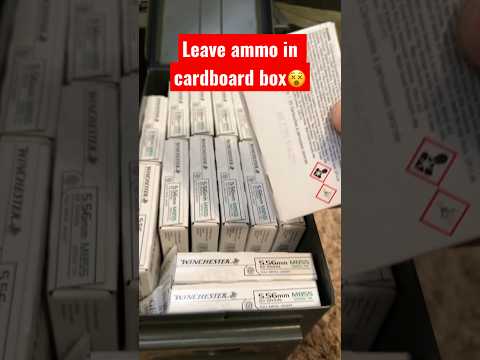
Buying ammo by the case lowers per-round cost, but only if you protect that investment through proper storage. Temperature swings and humidity are the primary enemies; keep cases in a cool, dry place, ideally below 70°F with under 50% relative humidity. Seal opened cases in airtight, military-spec ammunition cans with desiccant packs to prevent corrosion and primer degradation. Rotate your stock using a first-in, first-out system—shoot the oldest case first, even .17 WSM Ammo for Sale if new purchases arrive, to maintain a consistent shelf life of a decade or more. Label each case with purchase date to track age and avoid unknowingly shooting degraded rounds. Q&A: How long does a sealed case of ammo last? Under ideal dry, cool storage, factory-new ammunition can remain reliable for 20 years or more, while opened cases should be used within a few years.
Ideal Temperature and Humidity Levels for Long-Term Ammo Boxes
For ammo stored by the case, the ideal temperature and humidity levels for long-term ammo boxes hinge on stability and dryness. Maintain a constant temperature between 55°F and 70°F; avoid thermal cycling, which causes condensation inside sealed cans. Relative humidity must stay below 35%, with 20–25% being optimal, to prevent primer corrosion and powder degradation. Use desiccant packs and a hygrometer inside each box, and never store cases on concrete floors, where moisture wicks upward. Check seals quarterly.
- Keep humidity below 35% RH to prevent case tarnishing and primer failure.
- Store at 55–70°F to minimize expansion-contraction stress on bullet seals.
- Recharge desiccants when the hygrometer reads above 30% RH.
- Elevate cases off concrete to avoid cold-surface condensation.
Airtight Containers, Desiccants, and Rotation Methods That Work
Start with airtight, military-spec cans and add a desiccant pack per 50 rounds to kill humidity before it corrodes brass. Silica gel beads work best when you recharge them after each range trip—don’t wait for the indicator to fade. For rotation, write the purchase month on every case and stack new cans behind old ones, pulling from the front first. Seasonal temperature swings inside a garage can push moisture past even sealed gaskets, so crack the lid every quarter and swap desiccants proactively. Never store ammo on concrete floors; elevate cans on a shelf to avoid micro-condensation. Rotate by lot number yearly, firing the oldest at training sessions.
Airtight cans plus recharged desiccants plus first-in-first-out rotation guarantees decades of reliable ignition.

How to Spot Corrosion or Damage Before It Ruins a Whole Lot
Before opening every box in a case, inspect the exterior for damage, as crushed corners or damp stains signal that moisture already breached the seal. Check the primer pockets and cartridge mouths for green or white powdery residue, which indicates active oxidation that will spread to adjacent rounds. Feel for rough patches or pitting on the brass, and verify that the case’s metal dividers are free of rust flakes. If you spot any discolored rounds, isolate them immediately, because corrosion migrates through contact. For a stored case, rotate it quarterly and shine a light inside to catch early spotting. Finally, smell for a metallic, vinegar-like odor—a reliable early warning that chemical breakdown has begun before visible symptoms appear.

Practical Tactics for Breaking Down and Using a Case Effectively
Breaking down a case of ammo starts with dividing it into manageable batches—don’t just open the box and dump everything into one loose pile. Keep original cardboard trays or use modular ammo cans to separate calibers or loads, so you can grab exactly what you need for a range session without digging through mixed rounds. When you do open a case, stagger your usage: pull from the oldest lot first to keep stock fresh, and rotate your reserve so you’re not stuck with a single aging batch. A key tactic is labeling each partial case with the purchase date and lot number right after breaking the seal, saving you guesswork later.
Always count your rounds as you distribute them—a quick tally per magazine or box prevents mid-session surprises and tells you when to restock before you’re dry.
Finally, reseal the case’s inner liner or use desiccant packs in your storage container to keep the remaining ammo dry, since opening a case exposes it to humidity that can degrade primer performance over time.
Creating a Range-Readiness System for Grabbing the Right Boxes
Building a range-readiness system for grabbing the right boxes starts with labeling each case’s end flap by caliber, bullet weight, and purpose—defensive, plinking, or match. Store cases in a dedicated rack or shelf where the most-used loads sit at waist height, not buried. Before each session, stage the exact boxes you’ll need in a separate “go” bin, leaving training ammo in the bulk stack. Use color-coded tape or tags to signal status: green for full, yellow for partial, red for empty. This sequence ensures you never tear into a sealed case mid-trip:
- Label every case by load profile upon receipt.
- Sort by range frequency—daily drills vs. zeroing.
- Stage the selected boxes in a portable tote with primers or tools.
- Return partial boxes to the same slot after use.
How to Split a Case with Shooting Partners Without Losing Track
Splitting a case with shooting partners starts by agreeing on caliber and lot number before the seals break, since mixed headstamps ruin tracking. Use a shared digital spreadsheet or a simple group chat where each shooter logs their exact round count and box serials the moment the case is opened. Divide the case into five or ten box increments, then assign each partner a distinct shelf or ammo can labeled with their initials and the date. Do not rely on memory, because a single unsorted range trip can erase a week’s accounting. Follow this sequence:
- Weigh or count the full case once, recording the total in the shared doc.
- Distribute boxes in pre-agreed stacks, photographing each stack’s serial numbers.
- Have each partner confirm receipt by typing “counted” next to their entry before leaving the range.
- After each session, cross-check remaining rounds 7mm PRC Ammo for Sale against the log and flag any discrepancy immediately.
Keep the original case’s lot sticker taped inside the shared can—this anchors every future split to one verifiable reference.
Using the “Open One, Finish One” Rule to Keep Ammo Fresh
When you buy ammo by the case, resist the urge to crack open multiple boxes for different guns or loads. The **“Open One, Finish One” rule** keeps your ammunition’s propellant and primers in the best possible condition by minimizing their exposure to fluctuating Ammo Cans & Storage for Sale humidity and oxygen. Only break the factory seal on a single box, and use it to completion before opening the next. This discipline prevents half-used boxes from lingering at the bottom of your range bag, where temperature swings accelerate powder degradation and corrosion. It also forces you to rotate your stock naturally, so you’re always shooting the oldest lot first, ensuring consistent ballistics and reliable ignition.
- Assign a designated “active” box and physically finish it before a new one 5.7x28mm Ammo for Sale is opened.
- Store unopened cases in a cool, dry spot—their sealed plastic is your best barrier.
- At the range, return 5.56 Ammo for Sale unused rounds from the active box to their original tray, not a loose pocket.
- Mark the case’s purchase date to track which lot is being cycled through.
Caliber-Specific Tips When Ordering a Full Case
When you commit to a full case of 9mm, you’re usually fine grabbing any lot, but for .22LR, always ask the supplier if the case shares a single manufacturing batch—rimfire accuracy shifts wildly between runs, and a mixed case ruins your zero for a season. For .308 or 6.5 Creedmoor, a full case is a long-term investment, so request the lot number *before* payment and verify the box labels match, because a pallet of mixed headstamps will force you to re-chrono every hundred rounds. With 5.56, check the projectile weight stamped on the case flap—a full case of 62-grain versus 55-grain changes your entire adjustable gas block tune. For magnum revolver calibers like .357, buy a case only if your cylinder throats measure consistently, otherwise you’ll be chasing pressure signs across 500 rounds of otherwise identical brass. Finally, for 12-gauge slugs, confirm the case’s shell length is 2¾-inch *and* that the crimp style matches your shotgun’s ejection port, since a full case of 3-inch loads will beat your stock to splinters.
9mm and .45 ACP: Balancing Recoil and Practice Volume
When you’re buying ammo by the case, the 9mm vs .45 ACP choice really comes down to your recoil tolerance and how often you plan to shoot. A case of 9mm is lighter to haul, cheaper per round, and lets you practice twice as much for the same budget—perfect for building muscle memory. The .45 ACP hits harder, but that pushy recoil tires your wrists faster during long range sessions. If you’re ordering bulk, consider a 9mm case for volume drills, and a smaller .45 ACP case for slow, deliberate work. That way, you get balanced recoil and practice volume without burning out.
| Aspect | 9mm | .45 ACP |
|---|---|---|
| Recoil per shot | Mild, flat | Sharp, heavy push |
| Practice volume per 7.62×39 Ammo for Sale case | High (more rounds) | Lower (fewer rounds) |
| Fatigue over 200 rounds | Low | High |
.223/5.56 and .308: Maximizing Accuracy Across a Bulk Lot
When ordering a full case of .223/5.56 or .308, accuracy uniformity depends less on the cartridge and more on lot consistency. For .223/5.56, chronograph a sample of 20 rounds from one box to record velocity extreme spread; a spread under 30 fps indicates the lot will hold zero across your entire case. With .308, focus on bullet concentricity and case neck tension, as heavier projectiles amplify seating-depth deviations across bulk packaging. To maximize positional accuracy, sort your case’s ammunition by headstamp or weight batch; even a single-make lot can vary by a few grains. Fire a five-shot group from the first, middle, and last box to verify the bulk lot’s consistent ballistic performance before trusting it for long-range work.
Rimfire Options: Why .22 LR Cases Offer the Best Plinking Value
When specialty sports & supply ordering ammo by the case, rimfire options—especially .22 LR—deliver the best plinking value because the round’s low cost per unit makes bulk purchases exceptionally economical. A full case of .22 LR typically contains 5,000 rounds, letting you shoot for hours without matching the per-shot price of centerfire cartridges. This value is reinforced by the round’s minimal recoil and noise, which promote longer, accurate practice sessions. To maximize your case purchase, follow this sequence: first, confirm your firearm’s magazine capacity to estimate case usage; second, choose standard-velocity loads for reliability across semi-autos; third, calculate cost per round, not just case price. Plinking value peaks when you pair case quantities with a high-volume .22 LR training routine, eliminating per-range-trip purchasing waste.
- Verify round count (5,000 is standard) against your monthly shoot frequency.
- Test a small box first to ensure your rifle cycles the specific bullet profile.
- Store the case in a dry, temperature-stable place to preserve primer consistency.